Modern laboratories rely on a core set of analytical methods to ensure dependable results. Spectroscopy characterizes molecular and electronic structure via absorption, emission, and scattering laballiance sdn bhd. Chromatography separates and quantifies complex mixtures using tailored stationary and mobile phases. PCR and related amplifications detect and quantify nucleic acids with controlled cycling and contamination safeguards. Microscopy provides spatial resolution across modalities with standardized preparation. Immunoassays exploit antigen–antibody specificity for sensitive detection. Continue for practical implementation details and validation guidance.
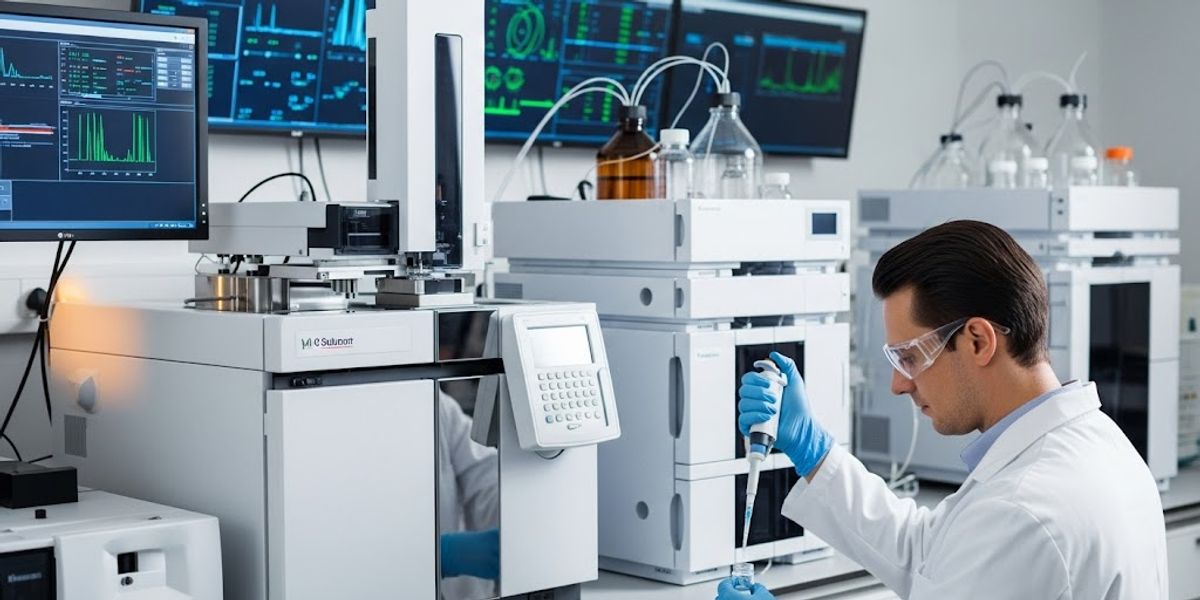
Spectroscopy Techniques: Principles and Practical Uses
Spectroscopy techniques provide quantitative and qualitative analysis by measuring interactions between electromagnetic radiation and matter; they translate spectral responses into molecular, atomic, or electronic information. The discussion delineates core principles—absorption, emission, scattering—and aligns instrument selection with analytical goals: sensitivity, resolution Lab Alliance, and sample compatibility. Raman mapping offers spatially resolved vibrational fingerprints, enabling compositional imaging without labels and supporting material characterization, polymorph detection, and failure analysis. Terahertz spectroscopy probes low-energy intermolecular modes and crystalline structure, useful for non-destructive inspection and detecting hydration or defects in pharmaceuticals and polymers. Implementation emphasizes calibration, baseline correction, and statistical validation to guarantee reproducibility. Method selection privileges minimal sample manipulation and maximal informational yield, empowering practitioners to choose techniques that preserve sample integrity while delivering rigorous, actionable spectral data.
Chromatography Methods for Separation and Analysis
Chromatographic separation techniques offer a systematic framework for isolating, quantifying, and characterizing complex mixtures by exploiting differential partitioning between stationary and mobile phases. Methods such as column chromatography, gas chromatography, and liquid chromatography are presented with operational principles, detector coupling, and solvent selection guidance. Emphasis is placed on method development: choosing stationary phase chemistry, optimizing flow rates, and minimizing band broadening to maximize resolution. Specialized applications include chiral separation through tailored chiral stationary phases or derivatization strategies to resolve enantiomers reliably. Validation criteria—selectivity, sensitivity, linearity, and robustness—are defined with practical metrics. Practical recommendations encourage modular workflows and documentation to preserve analytical freedom while ensuring reproducibility, traceability, and compliant data interpretation in diverse laboratory settings.
PCR and Nucleic Acid Amplification Strategies
Outline the principles and practical considerations of polymerase chain reaction (PCR) and related nucleic acid amplification techniques, describing their mechanisms, reagent components, and typical workflows used to detect, quantify, and manipulate DNA or RNA. The section explains thermal cycling, primer design, polymerase selection, dNTPs, buffers, and template quality assessment. Workflow stages—extraction, setup, amplification, detection, analysis—are delineated with attention to contamination control and validation. Quantitative approaches, including real-time PCR and digital droplet PCR, are contrasted for sensitivity, dynamic range, and absolute quantification. Alternatives such as isothermal amplification provide simplified instrumentation and rapid turnaround for point-of-care contexts. Recommendations prioritize reproducibility, appropriate controls, and documentation. Guidance emphasizes informed methodological choice aligned with assay objectives, regulatory needs, and operational freedom in laboratory implementation.

Microscopy: Imaging Modes and Sample Preparation
Microscopy—encompassing brightfield, phase-contrast, fluorescence, confocal, and electron modalities—provides the spatial and structural resolution necessary to visualize biological and material specimens across scales, and its effective use requires deliberate matching of imaging mode to sample properties and experimental objectives. Practitioners select modes to balance resolution, contrast, depth, and throughput; sample preparation must preserve native architecture while enabling chosen contrast mechanism. Polarized light aids anisotropic material characterization; cryo preservation maintains ultrastructure for high-resolution electron and cryo-fluorescence work. Preparation steps, from fixation to mounting, are chosen to minimize artifacts and permit reproducible imaging.
- Assess specimen thickness, refractive index, and desired contrast before choosing mode.
- Use minimal, validated fixation or cryo preservation when structure must be native.
- Match immersion media and objective numerical aperture.
- Standardize acquisition and metadata for reproducibility.
Immunoassays and Antibody-Based Detection
Immunoassays and antibody-based detection employ the specificity of antigen–antibody interactions to identify and quantify proteins, peptides, nucleic acid–protein complexes, and small molecules across clinical, research, and diagnostic applications. The section outlines formats—direct, indirect, sandwich, and competitive—clarifying selection criteria based on analyte size, concentration range, and matrix complexity. Monoclonal development is discussed as a route to reproducible affinity and reduced cross-reactivity, with validation parameters including affinity constants, epitope mapping, and batch consistency. Signal amplification strategies such as enzymatic reporters, tyramide deposition, and nanoparticle conjugates extend sensitivity while preserving linearity. Rigorous controls, calibration curves, limit of detection, and interference testing are presented as mandatory. Implementation guidance emphasizes assay robustness, throughput considerations, and documentation to support independent use and reliable results.

0 Comments Leave a comment